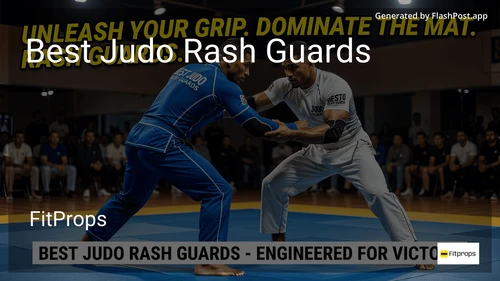
Best Judo Rash Guards to Buy in October 2026
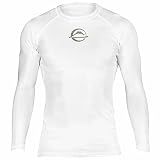
FUJI Baseline Ranked Long Sleeve Jiu Jitsu Rashguard, BJJ Rashguard for Men and Women, Size, Medium, White
- MINIMALIST DESIGN MATCHES ANY GEAR COMBO EFFORTLESSLY.
- HIGH-QUALITY FABRIC ENSURES DURABILITY FOR TOUGH TRAINING SESSIONS.
- LONG SLEEVES WITH SOFT PANELS GUARANTEE ULTIMATE COMFORT & MOTION.



Elite Sports New Item Standard Short Sleeve Compression, Mma, Bjj, No Gi, Cross Training Rash Guard, Large, Black
- SUPER LIGHTWEIGHT & BREATHABLE FOR ULTIMATE COMFORT DURING TRAINING.
- VERSATILE FOR ALL SPORTS, ENHANCING PERFORMANCE AND AIDING RECOVERY.
- DURABLE DESIGN WITH FLATLOCK STITCHING ENSURES LONG-LASTING WEAR.

Elite Sports BJJ Jiu Jitsu Rash Guard Men BJJ No GI MMA Ranked Full Sleeve Compression Rash Guards (Black, Small)
- SUPERIOR COMFORT WITH 85% POLYESTER & 15% SPANDEX BLEND.
- VERSATILE FOR MMA, BJJ, BOXING, AND VARIOUS MARTIAL ARTS.
- DURABLE DESIGN WITH ANTI-SLIP BANDS FOR ENHANCED PERFORMANCE.

Iron Jiu Jitsu Don't Tread on Me Rash Guard for Men - BJJ No Gi Rash Guard (US, Alpha, Medium, Regular, Regular, Black)
- VERSATILE FOR ALL MARTIAL ARTS: IDEAL FOR JIU JITSU, MMA, AND MORE!
- PREMIUM QUALITY: DURABLE, STRETCHY FABRIC WITHSTANDS RIGOROUS TRAINING.
- EXCEPTIONAL COMFORT: BREATHABLE DESIGN KEEPS YOU COOL AND DRY DURING WORKOUTS.
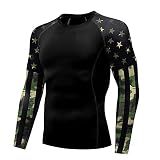
color cosplayer Jiu Jitsu Men American Flag UPF 50+ Sun Protection Printed Rash Guard Long Sleeve Swim Shirts
- STAY COOL & PROTECTED: UPF 50+ SHIELDS AGAINST SUNBURN IN STYLE.
- VERSATILE PERFORMANCE: IDEAL FOR SURFING, SWIMMING, AND OUTDOOR FUN.
- COMFORT & FIT: ULTRA-STRETCH, LIGHTWEIGHT FABRIC FOR TOTAL FREEDOM.
The Best Judo Rash Guards solve a very specific problem: mat burn across the chest and elbows, sweat-soaked cotton under a gi, and sleeves that bunch up the moment you start grip fighting. If you’ve ever finished newaza with a red forearm and a soaked T-shirt stuck to your back, you already know why a proper rash guard matters.
A good judo rash guard isn’t just “compression clothing.” The right one stays flat under your gi, manages sweat during hard randori, and survives repeated washing without stretching into a shiny, loose base layer. Below, you’ll get a practical buying guide, a budget breakdown, and the exact features that separate a rash guard that lasts 6 months from one that holds up for multiple training cycles.
How we select products: Our team reviews products daily, analyzing customer ratings, material specs, seam construction, pricing trends, discount history, and real buyer feedback to surface options that deliver strong value. For this guide, we focused on rash guards with at least 4.0-star average feedback, durable polyester-spandex blends, flatlock-style seam construction, and performance details that matter specifically under a judo gi.
What makes the Best Judo Rash Guards different from a regular compression shirt?
The Best Judo Rash Guards are built for friction, not just fitness. A standard gym compression shirt may feel fine under a hoodie or during weight training, but judo adds repeated sleeve tugging, chest pressure, lapel friction, and mat contact that expose weak stitching fast.
The biggest difference is usually the fabric weight and seam placement. Rash guards designed for grappling often use a tighter knit, more resilient stretch blend, and flatter seams that reduce skin irritation during turnovers, osaekomi, and long ground exchanges.
You’ll also notice a fit difference. The best options for judo sit close to the body without trapping your shoulders during gripping, which matters if you spend an hour alternating between uchi-komi, nage-komi, and newaza rounds.
How we picked the Best Judo Rash Guards for real training
I prioritized the same things experienced judoka complain about after 20 to 30 hard sessions: collar stretch, sleeve creep, underarm seam irritation, and fabric thinning at the shoulders. Those are the failure points that show up long before marketing claims do.
Here’s the short version of the selection criteria:
-
Fabric blend
- The sweet spot is usually a polyester-spandex or nylon-spandex blend with enough compression to stay put, but not so much that it restricts rotation during grip breaks and turnovers.
- In practice, high-stretch fabrics with roughly 15% to 20% elastane-style stretch content tend to recover shape better after repeated washing.
-
Flat seam construction
- Flatlock-style seams matter because raised seams rub under the gi jacket, especially near the armpit and shoulder line.
- If review patterns mention “chafing near the armpits” or “itchy seams,” that’s a real red flag for judo use.
-
Length and anti-ride fit
- A rash guard that’s too short will untuck during groundwork within a single round.
- Longer torsos and slight hem grip design usually perform better for turnover-heavy sessions.
-
Durability after washing
- The most reliable options keep compression after 20+ wash cycles and don’t develop bacon-collar necklines.
- Buyer feedback mentioning pilling, fading, or stretched cuffs within the first 2 months is a warning sign.
-
Rating threshold
- For commercial picks, I’d avoid anything below 4.2 stars unless it has a very high review count and the complaints are mostly about sizing, not durability.
- Once ratings dip under that line, complaints about seam failure and transparency increase noticeably.
Best Judo Rash Guards under $25: where beginners usually get the best value
If you’re new to judo, this is often the smartest price bracket. The best entry-level options usually give you enough compression, sweat control, and abrasion resistance for 1 to 3 sessions per week without overspending.
Best budget pick for beginners
The best budget option is typically a short-sleeve or long-sleeve rash guard with 4.4+ stars, several hundred verified reviews, and flat seams. In this range, you’re looking for basic reliability rather than premium paneling or advanced anti-odor treatments.
What you should expect at this level:
- Good moisture-wicking performance
- Moderate compression
- Acceptable durability for casual training
- Less refined seam placement than premium picks
What you should not expect:
- Heavy-duty reinforced stitching
- Elite-level abrasion panels
- Long-term shape retention if you train 4+ times weekly
For youth athletes, pairing a budget rash guard with the right gi matters just as much. If you’re also shopping for a junior uniform, this guide to the best kids judo gi is a useful companion.
Best Judo Rash Guards in the $25 to $50 sweet spot
For most adults, this is the best value zone. The Best Judo Rash Guards for regular training usually sit here because this bracket balances durability, seam quality, and fit consistency better than entry-level options.
If you train 2 to 4 times per week, this is where you’ll likely get the best cost-per-session. The better shirts in this tier usually resist shoulder abrasion longer and keep their compression after repeated hot washes and air drying.
Why this price bracket works for most judoka
You’re generally paying for three tangible upgrades:
- Stronger seam construction that handles sleeve pulling
- Better cut through the shoulders and lats for full rotation
- Improved recovery after washing, so the shirt doesn’t loosen after a month
This is also the safest bracket if you cross-train in BJJ, wrestling, or no-gi drills. A rash guard that performs well under a judo gi and during scrambles gives you more versatility per dollar.
Premium Best Judo Rash Guards over $50: are they worth it?
Sometimes yes, but only for a specific type of athlete. If you train 4 to 6 times a week, compete regularly, or burn through cheaper base layers every few months, premium rash guards can justify the cost through better longevity.
The real advantages at the top end are usually subtle, not dramatic. You may get denser fabric, cleaner seam mapping, stronger cuffs, and better shoulder mobility under tension. Those upgrades matter more during high-volume randori than during one recreational class a week.
Who should buy premium options
Premium picks make the most sense for:
- Competitors cutting hard training weeks
- Instructors on the mat several days weekly
- Judoka who hate replacing stretched-out tops every season
- Grapplers who want one high-end rash guard for judo and no-gi crossover use
If you’re a casual practitioner, premium isn’t automatically better. A mid-range rash guard with better review consistency often outperforms an expensive option with flashy design but mixed durability feedback.
What to look for before you buy the Best Judo Rash Guards
This is where most buying mistakes happen. People focus on color, design, or “compression” marketing and ignore the details that actually affect performance under a gi.
1. Choose sleeve length based on how you train
Long-sleeve rash guards protect your elbows and forearms better during mat work. They’re usually the better pick for heavy newaza, colder gyms, or athletes prone to mat burn.
Short-sleeve rash guards run cooler and feel less restrictive for some players during summer sessions. If your gi sleeves are already snug, short sleeves can reduce bunching at the upper arm.
2. Look for snug compression, not circulation-cutting tightness
A judo base layer should feel close-fitting, not vacuum-sealed. If your chest panel strains visibly or your shoulder rotation feels blocked during uchimata or seoi-nage entries, it’s too tight.
A good rule: you should be able to fully raise and rotate your arms without the hem pulling aggressively out of place. That’s a far better fit test than simply judging by how “compressed” it looks in the mirror.
3. Prioritize flat seams and reinforced high-friction areas
Shoulder seams take a beating under a gi jacket. Underarm seams fail next, especially in shirts with cheaper thread or a thin stitch pattern.
Look for product descriptions or review photos showing:
- Flatlock seams
- Reinforced stitching
- Dense stitching around cuffs
- Minimal raised seam bulk near the armpits
4. Check wash performance, not just first-wear comfort
A rash guard can feel great on day one and turn loose by week three. Review patterns matter here more than marketing copy.
The best signs are comments like:
- “Held shape after multiple washes”
- “Didn’t shrink or stretch”
- “Still snug after months of training”
5. Match fabric thickness to your gym climate
Hot, humid dojo? A lighter moisture-wicking layer will feel better during back-to-back rounds. Cooler training space or winter sessions? Slightly heavier fabric can help without overheating once class intensity rises.
💡 Did you know: Fabric thickness can change how your gi feels on grips. A slightly thicker rash guard often reduces friction hot spots at the collarbone and shoulders, especially during classes with lots of grip fighting.
What reviews reveal about bad judo rash guards
The fastest way to avoid a dud is to study complaint patterns. Across grappling apparel, the same issues show up over and over again.
Red flags that show up again and again
- Ratings under 4.2 stars with repeated notes about stitching failure
- Complaints about collars stretching after 5 to 10 washes
- Thin fabric described as “see-through” when stretched
- Sleeves riding up during sparring
- Loose torso fit that bunches under the belt line
- Sizing feedback that swings wildly between “too small” and “too loose”
The worst sign is inconsistency. If half the reviews praise the fit and the other half say the exact same size feels totally off, quality control is probably shaky.
What the better reviews usually mention
Reliable rash guards earn very similar praise:
- “Stays in place under the gi”
- “No mat burn on the elbows”
- “Dries quickly between sessions”
- “Compression still feels good after months”
- “Doesn’t bunch up during groundwork”
Those comments are more useful than generic “great shirt” praise because they describe actual grappling performance.
Best Judo Rash Guards for men, women, and kids: does the fit change?
Yes, and it matters more than many buyers think. The Best Judo Rash Guards are the ones that match your body shape closely enough to stay anchored under movement, not just the ones with the strongest materials.
For men’s fits, shoulder width and torso length usually matter most. If you’re also comparing uniforms, Fitprops has a useful roundup on gi selection that pairs well with rash guard shopping.
For women’s fits, chest shaping, waist taper, and sleeve proportion often decide comfort more than compression level alone. A unisex cut can work, but purpose-shaped athletic fits usually reduce bunching around the ribs and lower back.
For kids, comfort and seam smoothness matter more than maximum compression. A youth rash guard that feels scratchy or too tight often gets abandoned after two sessions, which makes “durability” irrelevant.
How to wash a judo rash guard so it lasts longer
This question comes up constantly because washing mistakes kill compression gear fast. Heat is usually the problem, not sweat.
Use this routine:
- Wash cold or cool after every session
- Turn it inside out
- Avoid fabric softener
- Skip high-heat drying
- Air dry flat or hang dry
High heat breaks down stretch fibers faster, especially in compression shirts worn under a gi. If you train 3 times a week, that damage adds up quickly over a 3-month period.
Is a judo rash guard worth it if you already wear a T-shirt under your gi?
Yes, for most athletes it is. A cotton T-shirt absorbs sweat, gets heavy, bunches at the waist, and rubs more during mat contact.
A proper rash guard dries faster, reduces friction, and usually feels cooler after the first 20 minutes of class. For anyone doing regular randori or groundwork, the upgrade is noticeable in the first week.
Final recommendation: what matters most before you buy
If you only use one rule, make it this: buy the rash guard with the most consistent durability feedback, not the most aggressive compression claim. In judo, flat seams, stable fit, and wash resilience matter more than flashy design or exaggerated performance promises.
For most people, the best choice is a mid-range, long-sleeve rash guard with 4.2+ stars, flatlock seams, and a snug but non-restrictive fit. That combination gives you the best balance of comfort, mat protection, and real-world lifespan.
Frequently Asked Questions
What is the best material for a judo rash guard?
The best material for a judo rash guard is usually a polyester-spandex or nylon-spandex blend that balances stretch, sweat control, and abrasion resistance. You want enough elastane for compression, but a dense enough knit that the fabric doesn’t go thin under repeated gi friction.
How tight should a judo rash guard fit?
A judo rash guard should fit snugly against your body without limiting shoulder rotation or pulling hard at the hem. If it bunches under your gi, it’s too loose; if your movement feels restricted during throws or grip breaks, it’s too tight.
Is a long sleeve or short sleeve rash guard better for judo?
Long sleeve is usually better for judo if you want more protection from mat burn and gi friction, especially during newaza-heavy classes. Short sleeve works well in hot gyms or for athletes who dislike extra fabric around the elbows and forearms.
How to wash a rash guard for judo without ruining it?
Wash it in cold water, inside out, and avoid fabric softener or high-heat drying. Air drying preserves elasticity better, which helps the shirt keep its compression and shape after repeated weekly sessions.
Are expensive judo rash guards worth it?
They’re worth it if you train 4 or more times per week, compete, or regularly wear out cheaper base layers. For most recreational judoka, a well-reviewed mid-range option delivers better value than a premium pick with features you may never notice on the mat.